

An Interview with Mirna Huhoja-Dóczy: Founder of Bits of Brand
November 21, 2024Even from behind a screen, Milan Design Week has a way of pulling us into its orbit. Scrolling through this year’s highlights, a few installations truly broke through the noise.
IKEA’s “Food For Thought” Was the Unexpected Soul of Design Week
There’s something wonderfully ironic about IKEA becoming one of the most emotionally intelligent presences at Milan Design Week.
Hidden inside Spazio Maiocchi, “Food For Thought” could easily have become another cleverly branded activation with photogenic tablescapes and Scandinavian buzzwords, but instead it seemed surprisingly human.
Returning to Milan after 31 years, they presented the tenth edition of the iconic IKEA PS collection, featuring three preview pieces that are playful and practical at the same time: an inflatable easy chair, a solid pine rocking bench, and a three-directional floor lamp. The collection continued IKEA’s Democratic Design philosophy, but with a softer, more expressive energy. Co-created with architect Midori Hasuike and spatial designer Emerzon, the space explored how food influences relationships, rituals, and interiors in personal ways.
Collaborations between five interior designers and five chefs, who created immersive room-and-menu pairings, explored how the spaces we cook in shape how we gather, communicate, and care for one another. While many brands seemed obsessed with making design feel more futuristic, IKEA reminded everyone that the simple kitchen table remains one of the most important design objects we own.
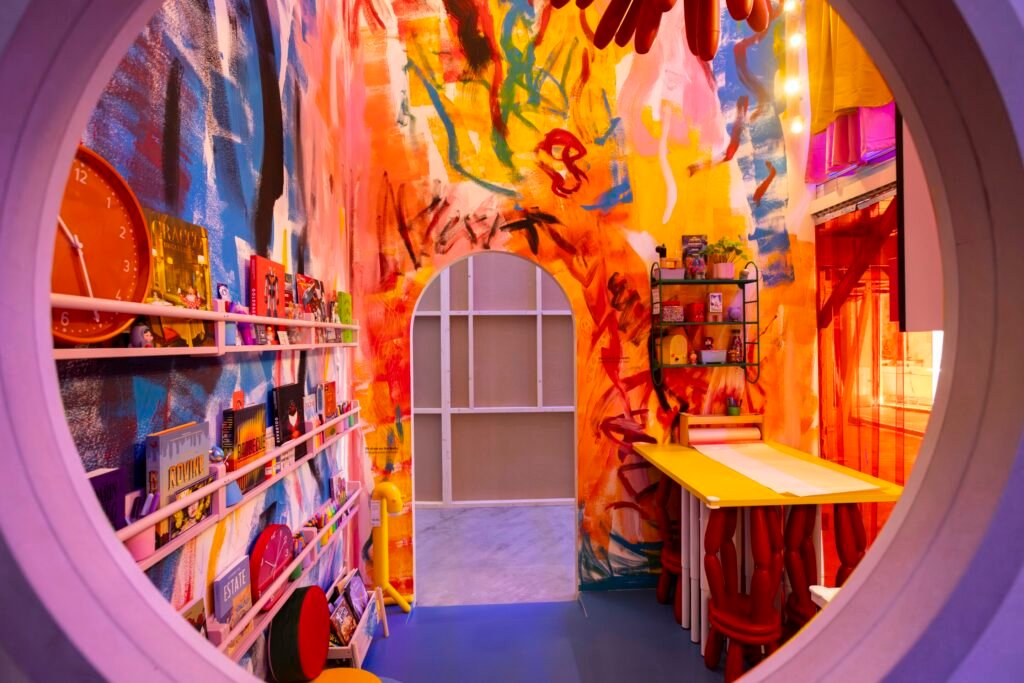
Outside, the courtyard transformed into a contemporary Swedish market with local Italian producers, upcycled textile pieces, and perhaps the most Milan Design Week sentence imaginable: a “meatball lollipop” created with Chupa Chups. The exhibition also incorporated sustainability through collaborations with Too Good To Go and with AI-powered smart waste bins from the Italian startup Etrash.
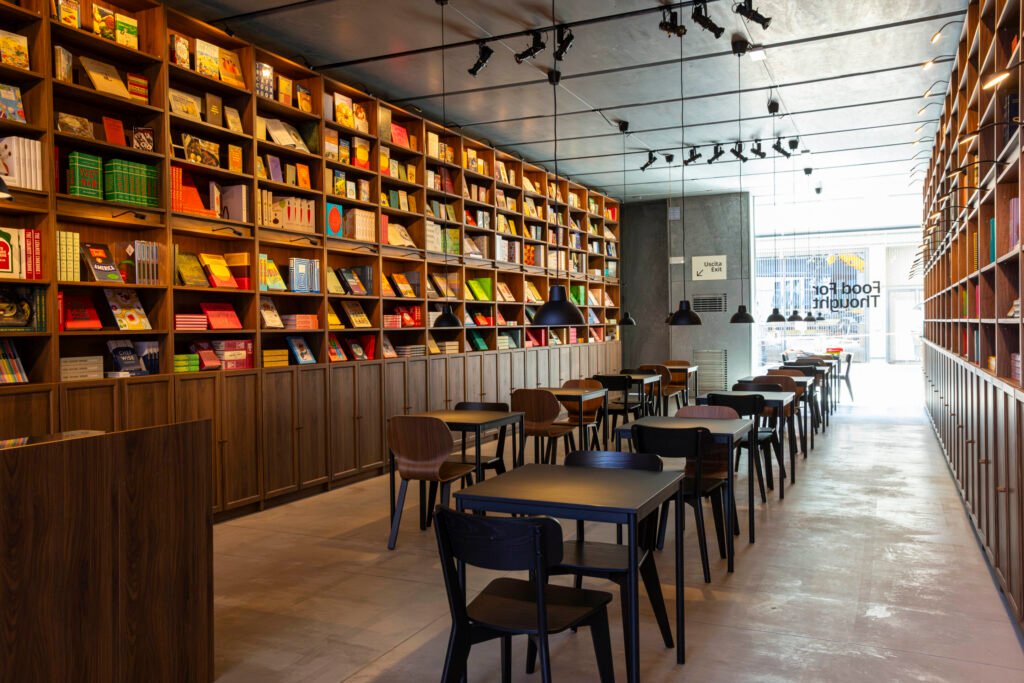
And then there was the BILLY café.
In the middle of Milan’s annual design madness, IKEA created a library-inspired break framed entirely by the iconic BILLY bookcase and filled with 1,000 cookbooks curated by Phaidon. Somehow, it became one of the city’s calmest places.
Audi and Zaha Hadid Architects Created a Moment of Silence
At Milan Design Week, silence is almost radical, so when Audi and Zaha Hadid Architects presented “Origin” inside the courtyard of the Portrait Hotel on Corso Venezia, it was a highly welcomed moment for pause.
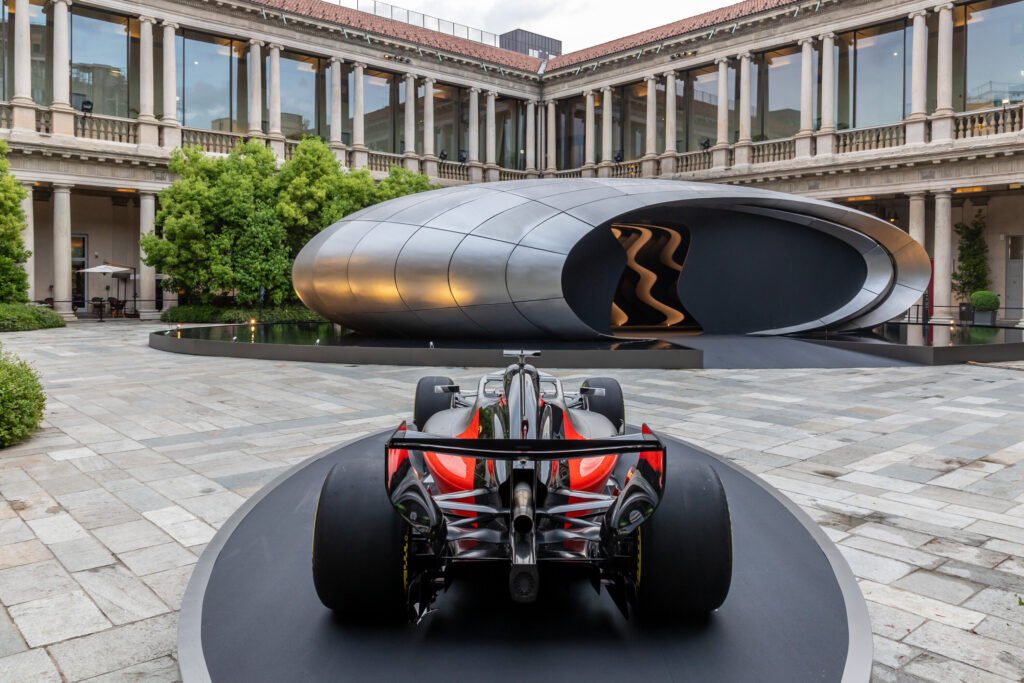
The structure itself appeared almost liquid as it interacted with light, wrapped in a matte metallic skin reminiscent of titanium. The installation moved throughout the day as shadows changed position, so depending on where you stood, the architecture either absorbed its surroundings or reflected them back with subtle distortion.
Created as an interpretation of Audi’s evolving design philosophy, “clarity, technicality, intelligence, and emotion”, “Origin” translated automotive thinking into spatial experience without becoming overly literal.
The project also reflected on a larger cultural-related conversation about sensory overload and our collective inability to disconnect. Audi’s Chief Creative Officer, Massimo Frascella, described design as a tool for helping people “filter the noise, find clarity, and reconnect with what truly matters”.
Of course, this was still Audi.
The new Audi RS 5 plug-in hybrid and the Audi R26 Formula 1 car were also presented in Milan, grounding the exhibition in the brand’s future-facing ambitions. But in contrast to traditional automotive showcases, the vehicles felt secondary to the atmosphere itself.
Samsung Turned Technology Into Something Emotional
Technology brands at design fairs often fall into one of two categories: futuristic or interactive, and Samsung somehow managed to avoid both.
Its exhibition, “Design is an Act of Love,” presented at Superstudio Più, explored the emotional side of technology through 12 immersive zones that helped decipher a relationship between humans and devices.
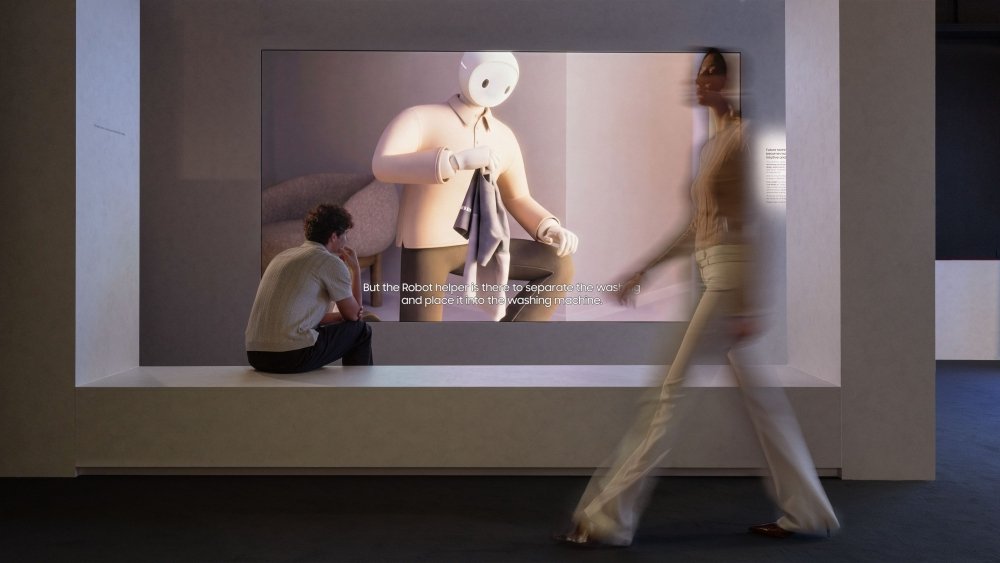
It opened with “The Welcome Show,” a synchronized choreography of AI-connected devices that created an unusual poetic introduction to Samsung’s ecosystem and from there, the exhibition moved through a series of intimate spaces.
“Unfold Your Story” showcased an expressive spectrum of color across Samsung’s foldables, illustrating diverse lifestyles and individual identities, while “Wearable Intelligence” and “Culinary Intelligence” explored how technology can support physical and mental well-being in a less clinical, more human way.
One of the most visually impressive moments came from “Transparent Symphony,” in which transparent Micro LED displays merged with the surrounding architecture.
Nearby, “All That Music” embraced nostalgia and immersive audio-visual experiences, making futuristic technology feel warm rather than distant.
Samsung’s approach to AI felt softer than what we are used to seeing from the tech world – instead of presenting artificial intelligence as disruptive or dominant, the exhibition presented it as adaptive, supportive, and quietly present.
Even the last installation, “The Goodbye Show,” avoided taking itself too seriously. Visitors were greeted one last time by Project Luna, an AI home device designed to feel playful, emotional, and intentionally pop.
The Real Luxury This Year Was Emotional Clarity
Every Milan Design Week seems to develop its own language. Some design weeks focus on material experimentation. while others celebrate maximalism, sustainability, or digital futures. This year, at least from what we could see online, the projects sought emotional clarity, possibly marking a new era of design.
